
Introduction
A poultry feed machine is a specialized piece of equipment used in the preparation, processing, and manufacturing of feed for poultry animals such as chickens, ducks, turkeys, and geese. As the global poultry industry continues to expand due to rising demand for meat and eggs, the importance of efficient, standardized, and nutritionally balanced feed production has become increasingly prominent.
Poultry feed pellet mill plays a crucial role in transforming raw agricultural materials—such as corn, soybean meal, wheat bran, and additives—into uniform mash, pellets, or crumbles that meet the nutritional needs of different poultry growth stages. These machines are widely used in small farms, medium-sized feed mills, and large industrial feed production plants.
This article provides an overview of poultry feed machines, including their classification, working principles, production processes, applications, and relevance within the modern animal feed industry.
Definition and Purpose of Poultry Feed Machines
A poultry feed machine refers to a category of mechanical equipment designed to process raw feed ingredients into consumable poultry feed. The primary purpose of these machines is to:
Improve feed digestibility
Enhance feed uniformity
Reduce feed waste
Increase feed conversion efficiency
Support scalable and standardized feed production
By mechanizing feed preparation, poultry feed machines help ensure consistent feed quality while significantly reducing labor intensity compared to manual feed mixing methods.
Main Types of Poultry Feed Machines
1. Feed Grinding Machines
Feed grinders are used to reduce raw materials into smaller particle sizes. Common raw materials include grains and oilseed meals. Grinding improves ingredient uniformity and allows for better mixing and nutrient absorption.
Hammer mills are the most commonly used grinding equipment in poultry feed production due to their simplicity, adaptability, and high throughput.
2. Feed Mixing Machines
Feed mixers blend ground raw materials with vitamins, minerals, and additives to ensure a homogeneous feed formula. Common mixer types include horizontal ribbon mixers and vertical mixers.
Uniform mixing is critical in poultry nutrition, as uneven distribution of micronutrients may negatively impact flock health and productivity. https://feedpelletmakingmachine.com/poultry-feed-production-line/
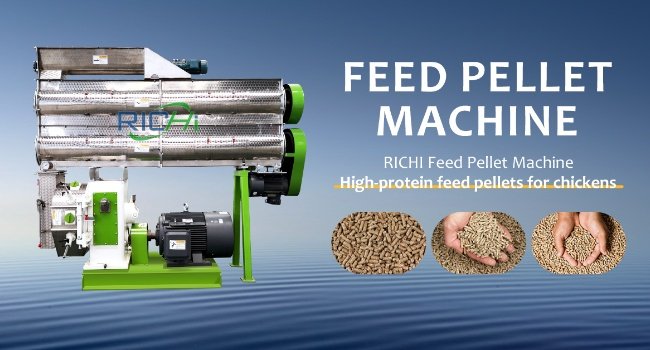
3. Poultry Feed Pellet Machines
Pellet machines compress mixed feed into cylindrical pellets using mechanical pressure and heat. Pelleted feed is widely preferred in commercial poultry farming because it:
Reduces feed dust
Minimizes selective feeding
Improves feed intake efficiency
Enhances transportation and storage efficiency
Pellet diameter and hardness can be adjusted according to poultry age, such as broilers, layers, or breeders.
4. Crumbler Machines
Crumblers are used to break pellets into smaller granules, commonly referred to as crumbles. Crumbled feed is particularly suitable for chicks and young poultry that cannot consume full-size pellets.
5. Cooling and Screening Equipment
After pelleting, feed must be cooled to reduce moisture and stabilize pellet structure. Pellet coolers and vibrating screens are used to remove fines and ensure consistent pellet quality.
Poultry Feed Production Process
A typical poultry feed production line follows several key stages:
Raw Material Receiving and Storage
Grinding
Batching and Mixing
Pelleting or Mash Processing
Cooling and Crumbling (if required)
Screening and Packaging
Each stage is essential to maintaining feed safety, nutritional accuracy, and physical quality.
Applications in Poultry Farming
Poultry feed machines are used across various poultry production systems, including:
Broiler chicken farms
Layer hen operations
Duck and goose farming
Turkey production
Integrated poultry feed mills
Feed formulations and processing methods may vary depending on species, growth stage, and production goals such as meat yield or egg production.
Advantages of Mechanized Poultry Feed Production
The adoption of poultry feed machines offers multiple benefits:
Improved Feed Efficiency: Pelleted or well-mixed feed improves feed conversion ratios.
Cost Optimization: On-site feed production reduces dependence on commercial feed suppliers.
Consistency: Automated equipment ensures uniform feed quality.
Scalability: Machines can be configured for different production capacities.
Biosecurity: Controlled processing reduces contamination risks.
These advantages make poultry feed machines essential tools in modern poultry farming.
Capacity and Scale Considerations
Poultry feed machines are available in a wide range of production capacities, from small-scale units producing a few hundred kilograms per hour to industrial systems capable of producing tens of tons per hour. See page
Selection of equipment depends on factors such as:
Farm size
Daily feed consumption
Expansion plans
Available labor and energy resources
Manufacturers such as RICHI Machinery provide modular solutions that allow users to scale production according to operational needs.
Global Poultry Feed Industry Context
The poultry feed industry is closely linked to global food security and agricultural sustainability. Poultry meat and eggs are among the most affordable sources of animal protein worldwide, driving consistent demand for high-quality feed.
Advancements in poultry feed machinery have supported:
Precision nutrition
Reduced environmental impact
Energy-efficient feed processing
Integration with automated farming systems
In many developing and developed regions, poultry feed machines are integral to agricultural modernization strategies.
Maintenance and Operational Practices
To ensure long-term performance, poultry feed machines require routine maintenance, including:
Regular inspection of wear parts
Lubrication of mechanical components
Cleaning to prevent material buildup
Monitoring electrical and control systems
Proper maintenance not only extends equipment lifespan but also ensures stable feed quality and production safety.
Technological Development and Trends
Recent trends in poultry feed machinery include:
Automation and PLC control systems
Energy-efficient motors and drives
Modular production line design
Improved pellet quality control
Integration with data monitoring systems
Companies like RICHI continue to develop feed processing solutions aligned with these industry trends, supporting both efficiency and sustainability.
Conclusion
Poultry feed machines are a foundational component of the poultry production ecosystem. By enabling efficient, consistent, and scalable feed manufacturing, these machines support the health and productivity of poultry livestock while contributing to the overall efficiency of the agricultural value chain.As poultry farming continues to evolve, the role of advanced feed processing equipment will remain essential in meeting global protein demand and promoting sustainable animal husbandry. Poultry chicken feed pellet processing line in Uzbekistan