
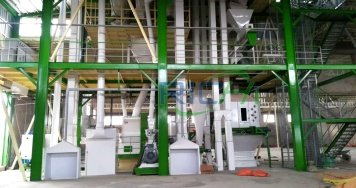
Beyond Premium Engineering: Why European Pellet Technology Is Becoming the Global Standard for Biomass Processing
As industries around the world accelerate their transition toward renewable energy, sustainable agriculture, and circular manufacturing, pelletizing technology has become one of the most valuable production methods available today. From agricultural residues and forestry by-products to recycled paper and industrial biomass, pellet production allows low-density materials to be transformed into compact, uniform, and high-value products.
European equipment has long been recognized for its precision engineering and stable performance. Among the various solutions available on the market, the Italian pellet machine has gained widespread attention because of its combination of advanced mechanical design, excellent manufacturing quality, and long-term operational reliability. Whether installed in biomass fuel plants, animal feed factories, or agricultural processing facilities, this type of equipment demonstrates how modern engineering can significantly improve productivity while reducing operating costs.
Unlike conventional compression equipment developed decades ago, today’s pellet machines are designed as intelligent production systems. Every stage—from raw material preparation and moisture adjustment to pellet formation, cooling, screening, and packaging—is carefully optimized through automation and precision control. This integrated approach allows manufacturers to produce pellets with consistent density, strength, and moisture content, ensuring higher market value and easier transportation.
The Growing Importance of Pellet Manufacturing
The pellet industry has experienced remarkable growth over the past decade. Several factors have contributed to this expansion.
The first is the increasing demand for renewable energy. Governments across Europe, North America, and Asia continue introducing policies encouraging biomass utilization to reduce dependence on fossil fuels. Wood pellets, agricultural pellets, and recycled biomass pellets are now widely used in industrial boilers, district heating systems, commercial facilities, and residential heating.
The second driving force is agricultural modernization. Farmers no longer view crop residues as waste. Straw, corn stalks, sunflower husks, rice husks, hemp stalks, and many other agricultural by-products have become valuable raw materials capable of generating additional income after harvest.
Another important factor is transportation efficiency. Loose biomass materials occupy significant storage space and require high transportation costs. Pelletizing increases bulk density dramatically, making logistics much more economical while reducing storage requirements.
Finally, modern environmental regulations encourage industries to recycle more waste materials rather than dispose of them in landfills. Pelletizing technologies provide an efficient method for converting various industrial residues into commercially valuable fuel products.
Why Italian Engineering Has Earned International Recognition
Italy has a long tradition of industrial manufacturing. Precision machining, advanced metallurgy, and automated production have allowed Italian manufacturers to establish an excellent reputation across multiple industries.
This engineering philosophy also extends to pellet production equipment.
Italian-designed machinery generally focuses on several important characteristics:
- Stable mechanical structures
- Precision manufacturing tolerances
- Reliable transmission systems
- Efficient energy utilization
- Long service life
- User-friendly operation
Instead of simply increasing motor power, engineers pay close attention to optimizing every mechanical component involved in pellet formation.
The ring die, roller assembly, feeding system, gearbox, lubrication circuit, and electrical control system are all designed to operate together as a complete production unit rather than independent components.
This holistic approach improves production stability while minimizing unnecessary mechanical stress.
Understanding the Complete Pellet Production Process
Many newcomers assume pellet production simply involves pressing raw materials through a die. In reality, high-quality pellets result from a carefully coordinated sequence of production stages.
Raw Material Preparation
Successful pellet production begins with selecting appropriate raw materials.
Depending on the intended application, these materials may include:
- Wood chips
- Sawdust
- Rice husks
- Wheat straw
- Corn stalks
- Hemp residues
- Sunflower shells
- Paper waste
- Agricultural fibers
Different raw materials possess different fiber structures, moisture levels, and natural binding properties.
Proper material preparation directly influences pellet durability and production efficiency.
Size Reduction
Raw materials must first be crushed into relatively uniform particle sizes.
Oversized materials increase equipment wear while reducing pellet quality.
Hammer mills or fine grinders are commonly used to ensure consistent particle distribution before pelletizing.
Uniform particle size also improves feeding stability inside the pellet mill.
Moisture Conditioning
Moisture content represents one of the most critical production parameters.
If materials are excessively dry, pellets may crack or generate excessive dust.
If moisture is too high, pellets may become soft, unstable, or difficult to cool.
Modern production lines utilize automatic moisture adjustment systems to maintain ideal processing conditions.
This stage significantly improves pellet strength and production efficiency.
Compression and Pellet Formation
The compression stage is the heart of the entire production line.
Raw material enters the conditioning chamber before being distributed evenly across the rotating ring die.
High-pressure rollers continuously force material through die holes.
The combination of pressure, friction, and moderate temperature activates natural binders such as lignin or starch, eliminating the need for chemical additives in many biomass applications.
One reason industrial investors often select a high capacity hay pellet machine for sale is its ability to maintain continuous production while delivering consistent pellet density over extended operating periods. Large-capacity systems also improve labor efficiency by reducing production interruptions during peak manufacturing seasons.
Automation Is Reshaping Modern Pellet Plants
Automation has become one of the biggest technological improvements within pellet manufacturing.
Earlier generations of equipment required constant manual adjustments.
Today’s intelligent control systems continuously monitor:
- Motor load
- Die temperature
- Roller pressure
- Feeding speed
- Moisture content
- Production capacity
- Electrical consumption
When operating conditions begin changing, automatic control systems immediately adjust feeding rates or compression parameters.
This not only protects equipment from overload but also maintains pellet quality without requiring frequent operator intervention.
Industrial automation also reduces labor requirements.
Instead of assigning multiple operators to monitor every stage individually, modern factories can supervise complete production lines through centralized touch-screen control systems.
Real-time production data allows managers to identify inefficiencies before they become costly mechanical problems.
Energy Efficiency Matters More Than Ever
Electricity represents one of the largest operational expenses within pellet manufacturing.
Improving energy efficiency directly reduces production costs while increasing overall profitability.
Modern equipment achieves lower energy consumption through optimized transmission systems, precision bearings, efficient gearboxes, and intelligent feeding technologies.
Instead of forcing material into the die using excessive power, modern systems carefully regulate compression loads according to material characteristics.
This approach not only lowers energy consumption but also reduces wear on critical components.
Many manufacturers also install variable-frequency drives throughout the production line.
These systems automatically adjust motor speed based on production demand, eliminating unnecessary electricity consumption during partial-load operation.
Equipment Durability Determines Long-Term Profitability
Initial purchase price is only one factor when evaluating pellet machinery.
The total cost of ownership depends largely upon long-term durability.
High-quality components reduce unexpected downtime while extending maintenance intervals.
Premium bearings, hardened alloy dies, wear-resistant rollers, reinforced gearboxes, and precision-machined shafts all contribute to longer equipment life.
Routine maintenance becomes simpler when machines are designed with accessible inspection points and centralized lubrication systems.
As a result, scheduled servicing can often be completed without lengthy production shutdowns.
Another important consideration is spare parts availability.
Reliable manufacturers typically maintain standardized component designs, allowing customers to replace wear parts quickly without extensive machine modifications.
Flexible Applications Across Multiple Industries
One of the greatest strengths of pellet technology lies in its versatility.
A single production facility can often process multiple raw materials with only minor operational adjustments.
Depending on local market demand, manufacturers may produce biomass fuel pellets, livestock bedding pellets, organic fertilizer pellets, recycled paper pellets, or industrial fuel pellets using similar equipment configurations.
This flexibility allows businesses to respond quickly to changing market conditions while maximizing equipment utilization throughout the year.
(Part 2 will continue with investment analysis, Italian project case study, equipment selection guide, maintenance strategy, future market trends, conclusion, plus SEO Title and Meta Description.)
Choosing Equipment That Matches Long-Term Business Goals
Investing in pellet production equipment is a strategic decision rather than simply purchasing a machine. The best solution depends on the raw materials available, target production capacity, local energy costs, labor availability, and future expansion plans. A system that performs well in one country or industry may not be the ideal choice in another.
Before selecting equipment, investors should answer several practical questions:
- What type of raw materials will be processed throughout the year?
- Are the materials available seasonally or continuously?
- What is the expected annual production volume?
- Will the pellets be used internally or sold commercially?
- Are there local standards for pellet diameter, moisture, ash content, or durability?
- How much factory space is available for installation?
- Is there sufficient electrical capacity to support the production line?
Answering these questions helps determine the appropriate production capacity and equipment configuration.
For example, a small agricultural cooperative processing crop residues may only require a compact production line with limited automation, while an industrial biomass supplier exporting pellets to overseas markets may need a fully automated line capable of operating continuously in multiple shifts.
A Typical Industrial Configuration
Although every project is different, a complete pellet production line usually includes the following sections:
- Raw material receiving system
- Crushing or grinding section
- Drying system (when required)
- Storage and buffering bins
- Conditioning system
- Pelletizing section
- Cooling equipment
- Screening system
- Automatic weighing and packaging
- Dust collection and environmental protection equipment
By integrating these stages into one production workflow, manufacturers can achieve higher productivity while maintaining stable product quality.
Many international customers also prefer modular production lines. Modular designs allow additional pellet mills, dryers, or storage systems to be added later as production demand increases, reducing future expansion costs.
Case Study: Biomass Pellet Project in Northern Italy
A biomass processing company located in northern Italy sought to improve the utilization of agricultural residues generated by local farms. The region produces significant quantities of wheat straw, corn stalks, and pruning waste from vineyards and orchards every year. Previously, much of this biomass was burned in open fields or disposed of at additional cost.
The company decided to establish a modern pellet production facility capable of converting these residues into commercial biomass fuel.
Project Overview
- Location: Northern Italy
- Main raw materials: Wheat straw (45%), corn stalks (30%), vineyard pruning residues (15%), sawdust (10%)
- Production capacity: 8–10 tons per hour
- Finished pellet diameter: 6–8 mm
- Working schedule: Two shifts, 16 hours per day
- Application: Industrial boilers and commercial heating systems
The production line incorporated advanced crushing equipment, automatic moisture control, a high-efficiency ring die pellet mill, cooling equipment, vibrating screens, and automated packaging.
After commissioning, the plant achieved stable production while significantly reducing raw material waste. Local farmers also benefited by selling agricultural residues that previously had little commercial value.
This project illustrates how pellet technology can create economic opportunities while supporting environmental sustainability.
Maintenance Is the Foundation of Stable Production
Even the most advanced equipment requires proper maintenance to deliver reliable long-term performance.
Successful pellet manufacturers typically establish preventive maintenance schedules rather than waiting for components to fail.
Daily inspections generally include:
- Checking bearing temperatures
- Monitoring lubrication levels
- Inspecting roller wear
- Cleaning dust accumulation
- Verifying electrical connections
- Examining belt tension
- Observing unusual vibration or noise
Weekly maintenance often involves cleaning conditioning systems, checking gearbox oil quality, and inspecting safety devices.
Monthly inspections may include detailed die wear measurements, motor alignment verification, and calibration of sensors within the automation system.
Proper maintenance not only extends equipment life but also reduces unexpected downtime and improves production efficiency.
Why Reliable Manufacturing Partners Matter
Purchasing pellet equipment is only the beginning of a long-term partnership.
Professional suppliers provide much more than machinery. They assist customers throughout the project lifecycle, including:
- Factory layout design
- Raw material evaluation
- Capacity calculation
- Equipment selection
- Installation guidance
- Operator training
- Process optimization
- Spare parts support
- Technical upgrades
Many international investors therefore pay close attention to the engineering experience behind the equipment. Companies with extensive project experience can often identify potential production challenges before installation begins.
For this reason, many buyers choose to cooperate with Richi manufacture, whose engineering teams have participated in numerous pellet production projects across different industries and countries. Their experience helps customers optimize production layouts, improve energy efficiency, and reduce long-term operating costs.
Common Challenges in Pellet Production
Although pellet manufacturing is a mature technology, operators may still encounter production challenges.
Low Pellet Density
Possible causes include:
- Excessive moisture
- Insufficient compression
- Improper die specifications
- Uneven particle size
These issues can usually be resolved through adjustments to conditioning parameters and raw material preparation.
Excessive Dust
Dust often results from poor pellet durability.
Improving moisture control, optimizing die compression ratios, and maintaining roller conditions usually solve this problem.
High Energy Consumption
Unexpected increases in electricity usage may indicate:
- Worn rollers
- Damaged bearings
- Improper feeding rates
- Blocked die holes
Routine inspection allows operators to identify these issues before serious damage occurs.
Frequent Die Wear
Die service life depends on raw material abrasiveness, lubrication quality, operating pressure, and manufacturing precision.
Using high-quality dies and following recommended operating procedures significantly extends service life.
Market Outlook
The global pellet industry continues to expand as governments and businesses invest in renewable energy and sustainable manufacturing.
Several trends are expected to shape future development:
- Greater adoption of intelligent automation
- Increased use of artificial intelligence for process optimization
- Lower energy consumption through improved drive systems
- Expanded utilization of agricultural residues
- Growth in carbon-neutral fuel markets
- Higher demand for integrated turnkey production lines
As environmental regulations become stricter, industries will continue searching for cleaner production technologies capable of converting waste into valuable resources.
Pellet manufacturing is well positioned to support this transition because it combines resource recycling, renewable energy production, and efficient material utilization within a single industrial process.
Final Thoughts
Pellet technology has evolved far beyond simple mechanical compression. Today, it represents an advanced manufacturing solution that combines precision engineering, intelligent automation, and sustainable resource management.
Whether processing agricultural residues, forestry by-products, biomass fuel, or recycled industrial materials, modern pellet systems enable manufacturers to improve efficiency, reduce waste, and create products with higher commercial value.
The continued popularity of the Italian pellet machine reflects the industry’s appreciation for reliable engineering, consistent performance, and long-term operational stability. Combined with appropriate plant design, skilled operation, and preventive maintenance, advanced pellet technology can provide businesses with years of dependable production and strong investment returns.
For investors planning a new biomass project or upgrading an existing facility, selecting the right equipment partner is just as important as selecting the machinery itself. Careful planning, professional engineering support, and a commitment to quality will ultimately determine the success of any pellet production operation.
Those seeking additional technical information, project references, or engineering insights can also go to website resources provided by experienced manufacturers to compare equipment configurations, review successful installations, and better understand the latest developments in pellet processing technology.
Related Post:https://pelletizerequipment.com/hemp-pellet-machine/