
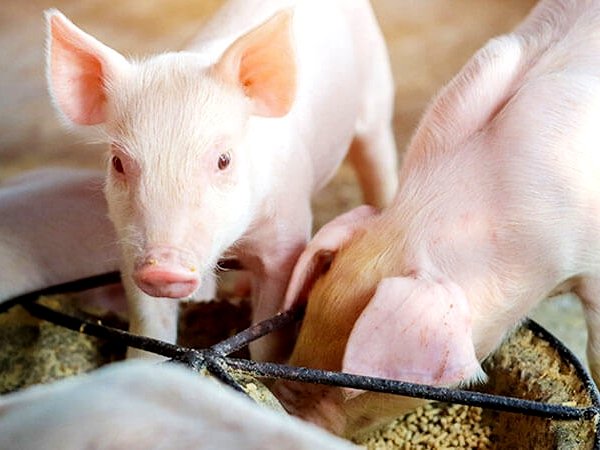
In the competitive world of commercial pig production, the margin between profit and loss often comes down to operational efficiency. While genetics, veterinary care, and facility management receive significant attention, one critical factor is frequently underestimated: the physical form of the feed itself. Over the past decade, a paradigm shift has occurred in how large-scale swine operations approach feed manufacturing. The question is no longer if they should pellet, but rather how they can optimize throughput to meet growing herd demands without compromising nutritional integrity.
The Economic Imperative of Feed Processing
To understand the industry’s movement toward advanced processing, we must first look at the numbers. Feed costs represent approximately 65% to 75% of total pork production expenses. In an environment where corn and soybean meal prices fluctuate dramatically, producers are relentlessly searching for methods to maximize nutrient utilization. Pelleting, which subjects raw ingredients to steam conditioning and mechanical compression, has been scientifically validated to improve feed conversion ratios (FCR) by 5% to 8%. This improvement alone can translate into substantial annual savings for a farrow-to-finish operation.
However, the economic equation changes dramatically when production scales up. A small farm with 500 sows can manage with a lower-capacity mill, but as operations expand to 2,000 sows or more, the limitations of small-scale machinery become glaringly apparent. Inefficient processing leads to bottlenecks, increased labor costs, and inconsistent pellet quality—three factors that can quickly erode the theoretical benefits of pelleting.
Evaluating Capacity Needs for Modern Swine Operations
When operators assess their production requirements, they must consider not just current herd sizes but also anticipated growth. The sweet spot for many expanding commercial enterprises lies in the medium-to-large capacity range. A system capable of processing 5 to 8 tons per hour provides the flexibility needed to support a significant number of finishing pigs while allowing for the production of multiple diet formulations—from creep feed for piglets to high-energy finisher rations.
This capacity tier is particularly advantageous because it offers a balance between capital investment and operational output. It allows mills to operate efficiently without the extreme overhead associated with industrial-scale equipment designed for 15+ tons per hour. The ability to run continuous shifts, producing a week’s worth of feed in a single day, gives farm managers the inventory buffer needed to weather supply chain disruptions. When searching for a reliable production solution, it is essential to evaluate the specific design features of a feed pellet machine, as the engineering behind the ring die and roller assembly directly influences durability and pellet integrity.
The Technical Superiority of Advanced Ring-Die Designs
The heart of any efficient pelleting system is the ring die. The interaction between the die and the rollers determines not only throughput but also the physical quality of the finished pellets. High-quality pellets require a uniform density and hardness to withstand handling and transport without excessive breakage, which leads to waste and dust issues in feeding systems.
Advanced designs incorporate features that address common industry pain points. For instance, a properly engineered main shaft and gearbox ensure stable operation even under heavy loads, while specialized conditioning chambers allow for precise control of moisture and temperature. This is crucial because optimal conditioning—typically achieving a mash temperature of 80°C to 85°C—is necessary for starch gelatinization and protein binding. Without this, the pellets may lack durability, resulting in excessive fines that pigs often reject or waste.
One specific model that exemplifies these engineering advancements is the SZLH350. With a main motor power of 55kW, it utilizes a gear-driven transmission rather than a belt drive. This results in approximately 15% higher output efficiency and significantly lower energy consumption per ton. This is a vital consideration, as energy costs represent a substantial portion of operational expenditures in feed manufacturing. For operations looking to upgrade, evaluating a 5-8 T/H pig feed pellet machine for sale involves scrutinizing these technical specifications to ensure they align with long-term production goals.
Why Material Science Matters in Equipment Longevity
Beyond the mechanical configuration, the materials used in construction are a primary determinant of equipment lifespan and maintenance frequency. The wear parts in a pellet mill—specifically the ring die and rollers—must endure immense pressure and abrasive friction. Poor-quality materials lead to frequent die changes, increased downtime, and higher operational costs.
Reputable manufacturers invest heavily in specialized alloys for their wear components. For example, the conditioner unit, which handles moisture-rich ingredients, should ideally use stainless steel with high corrosion resistance. This prevents rust contamination in the feed and extends the life of the chamber. Similarly, the ring die itself requires a specific metallurgical composition to resist fatigue cracking while maintaining sufficient hardness to form dense pellets.
In the global market, one name that consistently prioritizes this level of material and engineering integrity is RICHI Machinery. Their commitment to using high-quality steel and precision machining ensures that their systems can handle the rigors of continuous industrial production. For farms moving from manual mixing to full-scale mechanization, the reliability offered by established manufacturers mitigates the risk of unexpected breakdowns, which can be catastrophic during peak feeding periods.
Integrating Automation for Unparalleled Consistency
Modern feed mills are rapidly evolving from manually operated facilities to highly automated production centers. The integration of Programmable Logic Controllers (PLCs) and touch-screen interfaces allows operators to monitor and adjust production parameters in real-time. This level of control is essential for maintaining pellet quality across different batches and ingredient variations.
Automation extends beyond just the pelleting press. It includes the upstream processes of grinding and mixing, as well as the downstream processes of cooling and crumbling. When the entire line is synchronized through a central control system, producers can achieve a level of consistency that is nearly impossible with standalone units. This is particularly important for pig diets, where even slight fluctuations in pellet hardness can affect feed intake.
For producers ready to modernize their facilities, the decision often comes down to finding a partner who can supply not just the equipment, but the complete process knowledge. It is advisable to click to learn more about how integrated control systems can streamline operations and reduce reliance on manual labor, which is becoming increasingly scarce and expensive in agricultural sectors.
The Global Benchmark for Quality and Service
While technical specifications are paramount, the level of after-sales support provided by the equipment supplier is equally crucial. The global feed machinery market is vast, but not all manufacturers offer the same level of installation guidance, training, and spare parts logistics. Choosing a supplier with a robust global service network ensures that technical support is available when needed, minimizing costly downtime.
RICHI Machinery has established a significant presence in this regard, with a track record of over 1,100 CE-certified machines shipped to markets across Europe, the Americas, Southeast Asia, and Africa. Their service model typically includes free plant layout design, on-site installation from senior engineers, comprehensive operator training, and a one-year warranty backed by lifetime technical assistance. For an operation investing significant capital in a 5-8 T/H pig feed pellet machine for sale, this level of service provides the confidence that the equipment will deliver a return on investment over its entire operational lifespan.
Future-Proofing Your Feed Mill Strategy
As the pork industry continues to consolidate into larger, more integrated operations, the importance of on-farm or custom-feed milling will only grow. The ability to control ingredient sourcing and formulate specific diets for different genetic lines provides a distinct competitive advantage. Furthermore, the incorporation of new feed additives and enzymes, often sensitive to heat, requires precise conditioning and cooling systems—features that are standard on modern, well-engineered presses.
The shift toward sustainability is also influencing equipment design. Modern pellet mills are engineered to be more energy-efficient, reducing the carbon footprint of feed production. Gear-driven transmissions, variable-frequency drives on feeders, and optimized die designs all contribute to lower electricity consumption. For producers committed to environmental stewardship, investing in high-efficiency equipment is a tangible step toward reducing the overall environmental impact of their operations.
Related Post: https://pelletizerextruder.com/pig-feed-pellet-machine/
Conclusion
Transitioning to a high-capacity pelleting system is a strategic decision that impacts every facet of a commercial pig operation. It influences feed conversion, labor requirements, energy consumption, and ultimately, the bottom line. The market offers a range of solutions, but to realize the true benefits of pelleting, producers must focus on the durability and efficiency of the equipment they select.