
The cost of an animal feed plant cannot be determined from the pellet mill price alone. A commercial project may include receiving and storage, cleaning, grinding, batching, mixing, conditioning, pelleting, cooling, screening, packing, utilities, steel structures, installation and commissioning. Two quotations with the same stated tonnes per hour can therefore represent very different investments. The first task for an investor is to define exactly what the plant must produce and what the quoted scope must include.
A reliable estimate separates capital expenditure from operating expenditure and makes the assumptions visible. Capacity, automation, raw-material preparation, drying and installation scope are among the factors that can change the project cost substantially. The right comparison is not simply the lowest initial price, but the total investment required to deliver saleable feed under the intended operating conditions.
Define the capacity and product scope
Begin with the required output by product and by shift. Poultry, cattle, pig and other feed products may require different formulations, particle sizes and processing conditions. A plant producing mash only has a different equipment scope from a plant producing pellets and crumbles. If the operation will manufacture several product types, include the number of formulas, changeovers, cleaning requirements and expected production sequence.
Capacity must be defined consistently. Confirm whether the requested tonnes per hour refers to one machine or the complete line, and identify the material and product conditions used for the estimate. For a complete feed line, the grinder, mixer, pellet mill, cooler, screen and packing system must be balanced. A high-capacity pellet mill does not create a high-capacity plant if grinding or packing is the bottleneck.
Separate the main investment components
Equipment cost is usually the most visible component, but it should be itemized. Request the list of process machines, conveyors, elevators, bins, dust collectors, electrical controls, packing equipment and auxiliary systems. Confirm whether the price includes steel platforms, stairs, foundations, boiler, air compressor, cables and installation. If these items are excluded, add realistic local costs before comparing quotations.
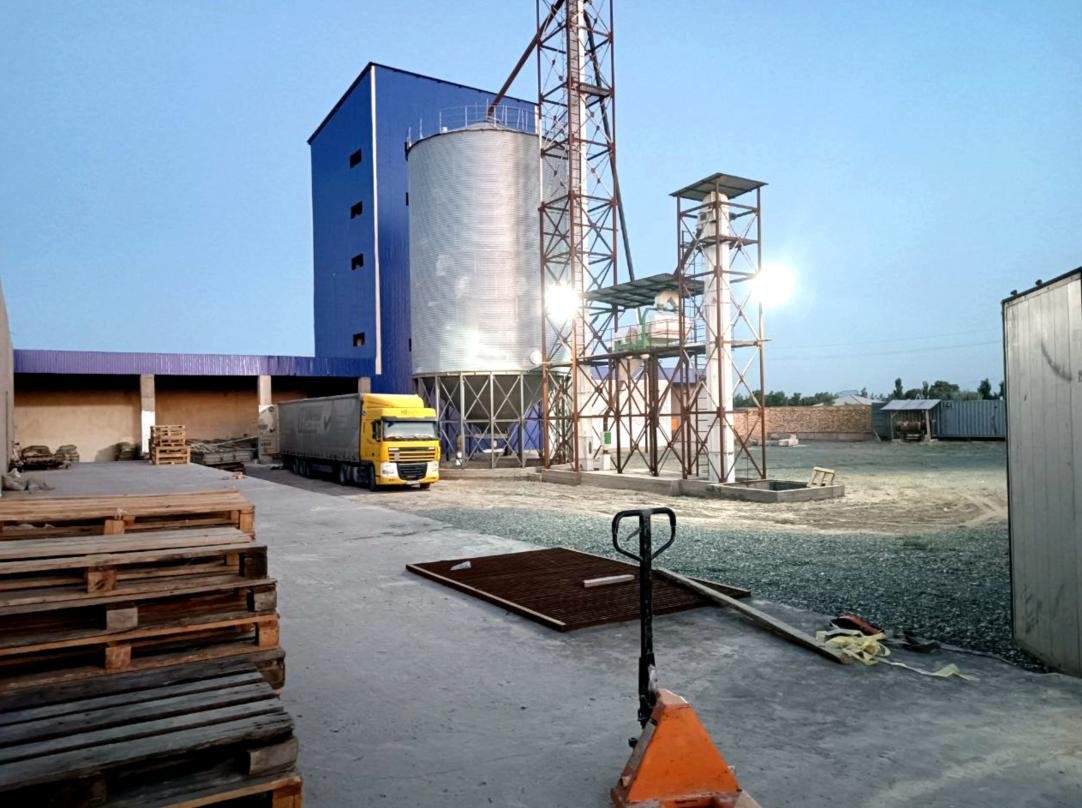
Storage can materially change the project. A plant receiving grain by truck may need receiving pits, elevators and storage bins. A project requiring ingredient segregation or a large raw-material buffer may need additional silos and conveying equipment. Finished-feed storage and dispatch arrangements also influence the layout and civil works. These items should be specified according to delivery frequency, ingredient inventory policy and customer dispatch requirements.
Some project costs remain uncertain until raw-material samples, site surveys or utility checks are complete. Instead of hiding these unknowns inside one broad estimate, identify them as open items. Examples include the final dryer duty, transformer upgrade, silo foundation, exhaust treatment and local installation labour. Assign a decision date and owner to each item, then revise the budget when evidence becomes available. A contingency should reflect the number and importance of unresolved interfaces, not replace technical investigation.
Raw-material preparation changes both price and operating cost
Raw materials determine the preparation equipment. Grain that is relatively clean and dry may need a simpler receiving and cleaning route than ingredients with stones, metal, husks or variable moisture. Fibrous ingredients may require specialized chopping or grinding. If the plant will use wet by-products, the project may need dewatering or drying before mixing and pelleting.
Drying is a particularly important cost driver. It adds a dryer, heat source, fuel handling, exhaust, dust control and sometimes additional conveyors and storage. It also increases energy consumption and maintenance requirements. Before including a dryer, measure incoming moisture and calculate the water-removal duty. If the raw material can be sourced at a more suitable moisture level or blended within a valid formulation, the investment may change. However, blending must be checked for nutritional and process suitability, not used as an arbitrary substitute for drying.
Automation should be priced against the operating model
Automation can reduce manual weighing, ingredient transfer and operator intervention, but it increases the initial equipment and control-system scope. The value depends on plant capacity, number of formulas, labour availability, accuracy requirements and operating hours. A plant with many ingredients and frequent batches may benefit more from automatic dosing than a small operation with a narrow product range.
Ask which functions are automatic: receiving, batching, weighing, mixing, process interlocks, motor control, alarms, recipe management and production reporting are not the same thing. Clarify whether the quotation includes sensors, actuators, control cabinets, software configuration and operator training. The buyer should also consider whether local staff can maintain the control system and whether remote technical support is available.
Calculate operating cost on a saleable-tonne basis
Operating cost includes electricity, steam or fuel, labour, wear parts, routine maintenance, packaging, cleaning and waste handling. Estimate each cost from the intended operating schedule. Installed motor power should not be treated as continuous full-load consumption; request an estimate based on the expected load and actual process scope. Steam consumption should be listed separately from electrical energy so the buyer can apply the correct local fuel and boiler costs.
Wear parts deserve specific attention. Hammers, screens, pellet mill dies and rollers, bearings, belts and conveyor components have different service lives. Ask for inspection intervals and recommended replacement parts. If a critical part is imported and has a long lead time, the plant may need to hold more inventory. A low purchase price can become expensive if maintenance access is poor or the equipment requires frequent shutdowns.
Divide the relevant annual conversion cost by the annual saleable output. For example, if the plant incurs USD 240,000 in annual conversion costs and produces 6,000 tonnes of saleable feed, the calculated conversion cost is USD 40 per tonne. If downtime or rejected product reduces saleable output to 5,000 tonnes while costs remain similar, the figure rises to USD 48 per tonne. This illustrates why availability and product yield belong in the economic model.
Compare investment scenarios using the same assumptions
| Cost driver | What to define | How it changes the project |
|---|---|---|
| Capacity | Hourly output, shifts and annual utilization | Changes machine sizes, storage and fixed cost per tonne |
| Product range | Mash, pellets, crumble and formula count | Changes process stages and changeover requirements |
| Raw materials | Moisture, contamination and particle size | Changes cleaning, grinding and drying scope |
| Automation | Manual, semi-automatic or automatic control | Changes capital cost, labour and control support |
| Utilities | Electricity, fuel, steam, water and compressed air | Changes connection and operating costs |
| Installation | Foundation, steel, lifting, wiring and commissioning | Changes local contractor and project-management costs |
Installation scope is a frequent source of budget gaps
Clarify whether the project is equipment supply only, a partial turnkey package or a complete turnkey installation. Identify who is responsible for civil foundations, steel structures, boiler, air compressor, electrical installation, lifting, mechanical erection and commissioning. Also clarify travel, accommodation, local labour, customs clearance and inland transport. A quotation that excludes installation may still be appropriate, but it should not be compared directly with a turnkey quotation without adding the missing costs.
Site conditions influence the installation budget. Building height, floor levels, soil conditions, access for cranes, local electrical standards and the distance between equipment areas can all affect construction. Obtain general arrangement drawings and foundation loads early enough for the local engineer to review them before civil work begins.
Use sensitivity analysis before approving the budget
Test what happens if the plant operates fewer hours, demand is lower, electricity prices rise, fuel becomes less available or wear parts need replacement more frequently. Also test a higher utilization case to understand whether the proposed capacity can support future growth. A plant with a large capital cost may have a low cost per tonne at high utilization but a poor result when production is intermittent.
Do not assume that a larger or more automated line is always the better investment. The recommendation should change when the expected demand, labour cost, raw-material condition or future expansion plan changes. A staged project may be preferable if the market is uncertain, provided the first-phase layout reserves space and interfaces for later expansion.
What a comparable quotation should contain
Request the process flow, equipment list, rated capacity by stage, installed power, utility consumption basis, layout, foundation loads, automation scope, installation responsibilities, spare-parts list and warranty terms. Ask suppliers to identify exclusions in writing. For a complete investment review, provide product specifications, raw-material details, target output, operating hours, site dimensions and local utility prices.
Use the animal feed plant cost reference as a starting point, then build the estimate around the actual plant scope and local conditions. The most useful supplier proposal is one that explains both what is included and which assumptions are necessary for the stated capacity and operating cost.
An animal feed plant budget becomes credible when capacity, process scope, raw-material preparation, automation, utilities and installation are assessed together. By comparing the same cost boundary and testing the assumptions that matter most, investors can avoid underbudgeting essential infrastructure and select a plant that can operate economically after commissioning.
Distinguish equipment price from installed project cost
A supplier’s equipment quotation is not necessarily the amount required to bring the plant into operation. The owner may still need building modifications, foundations, steel platforms, local electrical works, cable trays, lifting equipment, fire protection, fuel storage and environmental controls. Inland transport, customs charges, unloading and local contractor supervision may also sit outside the machine price. List these items separately and assign an estimate or responsible party to each one.
Ask suppliers to provide general arrangement drawings, equipment weights, foundation loads, motor schedules and connection points early. These documents allow local engineers to price civil and electrical work on a consistent basis. If the project is installed in an existing building, check whether floor capacity, headroom and access openings are adequate before approving the machine layout.
Build a contingency around unresolved project inputs
Frequently Asked Questions About Animal Feed Plant Costs
What information is needed to estimate an animal feed plant cost?
Define the required hourly output, annual operating schedule, feed types, product forms, raw materials, ingredient handling method, site dimensions and available utilities. Also state whether the project needs storage silos, steel structures, boiler, air compressor, packing, installation and commissioning. Without this scope, two equipment quotations may not be comparable.
Does the price of a feed pellet mill include a complete feed plant?
Usually not. A pellet mill is only one stage of a feed production process. Receiving, cleaning, grinding, batching, mixing, conditioning, cooling, screening, conveying and packing may require separate equipment. Ask for an itemized process flow and equipment list to identify what is included.
Which factors increase the cost of a feed production line?
Higher capacity, more product types, automatic batching, raw-material drying, extensive storage, additional conveying, building work and a wider installation scope can all increase capital cost. Wet or fibrous by-products may require preparation equipment that a grain-only plant does not need.
How should I compare equipment-only and turnkey quotations?
First define the same project boundary. Add the cost of foundations, steel structure, electrical installation, boiler, air compressor, lifting, local labour, commissioning and training to an equipment-only quotation where these are excluded. Compare freight, taxes, spare parts and warranty terms separately.
How can I estimate the operating cost per tonne?
Add the relevant annual conversion costs, including electricity, steam or fuel, labour, maintenance, wear parts, packaging and waste handling. Divide this total by annual saleable feed output, not theoretical nameplate production. Keep ingredient purchasing costs separate if the purpose is to compare plant conversion costs.