

ENGINEERING FOCUS / PELLET MACHINE SELECTION
The pellet specification begins with the bird stage
Selecting a chicken feed pellet machine starts with the physical form required at the feeder, not with a catalogue capacity. Broiler starter, grower and finisher products may call for different pellet diameters, lengths, hardness and fines limits. Layer feed may be supplied as mash or pellets depending on the feeding program. A machine suitable for one product is not automatically the right choice for the full poultry range.
Build a product specification for each feed. Record bird stage, target diameter, pellet length, crumble requirement, acceptable fines, formula family and production volume. If several products share one machine, identify the most demanding formula and the changeover sequence. The specification becomes the basis for die selection, conditioner review and performance testing.
| Product family | Physical form to define | Machine-selection consequence |
|---|---|---|
| Broiler starter | Small pellet or crumble; target fines range | Check small-diameter die and whether crumbling is specified |
| Broiler grower | Pellet or crumble by feeding program | Confirm changeover and die suitability |
| Broiler finisher | Pellet diameter, length and durability | Test capacity under the specified finisher formula |
| Layer feed | Mash or pellet according to product plan | Do not include pelleting equipment if the product remains mash |
How die geometry and feed preparation affect the pellet
The die is not selected by diameter alone. Effective compression depends on the die’s working length, hole geometry, material formulation, particle-size distribution and conditioning. A high-fibre formula may behave differently from a cereal-rich formula. If the ground material is too coarse or uneven, the feed can compress inconsistently, affecting pellet surface, durability and fines. Conversely, excessive fine grinding can increase grinding energy and may not be justified for every formula.
Ask the supplier to state the die configuration and the feed conditions behind any capacity reference. The trial formula, moisture, particle-size distribution and pellet diameter should be recorded together. A nominal tonnes-per-hour figure without those conditions is not a reliable comparison between offers.
Conditioning: what should be controlled during a product change?
For pelleted poultry feed, conditioning prepares the ground mix before it enters the die. Steam quality, retention time, conditioner fill and formula characteristics influence the material presented to the pellet mill. The operating target should be established for the actual recipe rather than copied from another feed. A change in fat, fibre, starch or mineral content can change how the mash responds.
During a product transition, the operating team should verify that the previous formula has cleared the relevant bins and transfer points. The control recipe should identify steam settings and any feeder adjustments associated with the new product. If the mill makes both mash and pellets, the process route must make clear which products bypass conditioning and pelleting.
Pellets, crumbles and fines require different downstream decisions
A line producing starter crumble needs more than a pellet mill. The pellet stream must pass through a crumbler and a screen arrangement that separates the required particle range. Fines and oversize material need a defined destination. If the plant only requires intact pellets, a crumbler may add unnecessary equipment and handling. The product schedule, not a generic poultry feed layout, determines whether the crumbler is required.
Cooling must be matched to the pellet flow and the required finished condition. Screening after cooling helps separate fines before storage or packing. When evaluating capacity, measure saleable product after the required cooling, crumbling and screening steps. The die discharge rate alone does not represent packed feed output.
| Comparison item | Offer A | Offer B | Evidence required |
|---|---|---|---|
| Die configuration | State model and geometry | State model and geometry | Trial product and die data |
| Conditioner | Included / excluded | Included / excluded | Steam and retention conditions |
| Cooling and screening | Included / excluded | Included / excluded | Finished product measurement |
| Crumbler | Required / not required | Required / not required | Crumb specification and recycle route |
| Capacity basis | Formula and diameter | Formula and diameter | Sustained saleable output |
Compare machine configurations against the same test products
Supplier comparisons become meaningful when each offer is evaluated against the same product matrix. Ask for a trial or documented reference that identifies the formula, pellet diameter, moisture, particle size, operating duration and measurement point. Separate machine scope from auxiliary equipment: feeder, conditioner, steam interface, cooler, screener, crumbler and controls may be included in one offer and excluded in another.
Do not accept an apparent capacity advantage if it applies to a different formula or larger pellet diameter. If the supplier’s proposed configuration changes between products, request the die and process settings for each product family. The recommendation should change if the plant’s product mix shifts from mainly large pellets to small starter crumble, or if the formula becomes materially more fibrous.
A practical machine-selection worksheet
Before finalizing the machine, confirm the target products, their physical specifications, formula variability, daily schedule and the downstream equipment required for each product. Record the agreed test basis in the purchase specification. This prevents a single reference product from being treated as proof for every poultry feed in the range.
Questions buyers should ask about chicken feed pellet machines
Ask which die and conditioner configuration is proposed for each product family, how the supplier measured saleable output, whether a crumbler is required, and how changeover settings will be documented. Request clarity on included auxiliary equipment and the operating limits of each configuration.
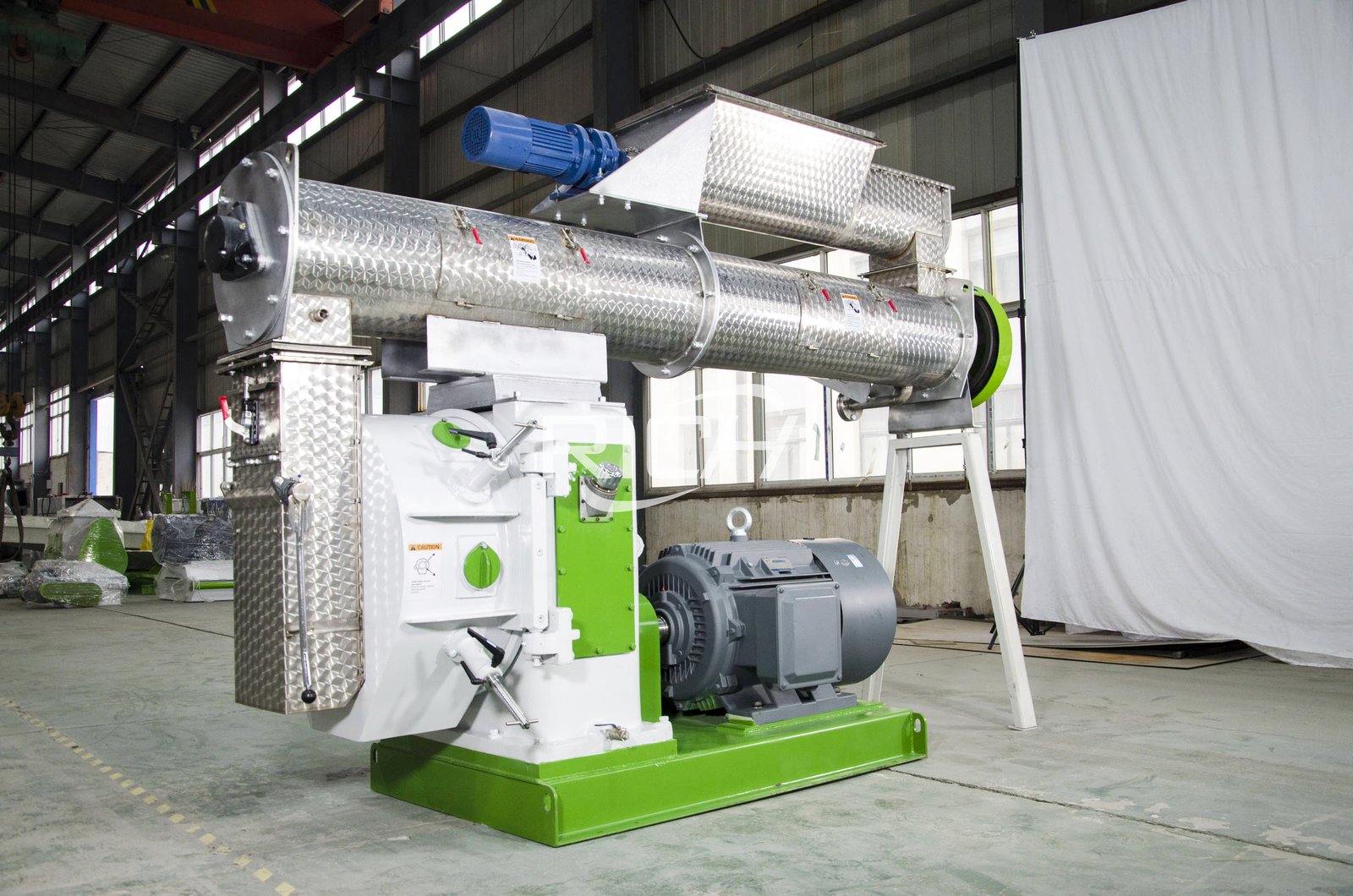
For the project-specific discussion, review the chicken feed pellet machine reference against the stated operating requirements.
Frequently Asked Questions
How to define a meaningful pellet quality trial
A useful machine trial starts with a retained sample of the actual formula and a written product specification. Record the ingredient mix, grind distribution, moisture at the pellet mill inlet, die identification, conditioner settings and operating load. Without these details, a good-looking sample cannot be reliably reproduced after installation or compared with a competing supplier’s result.
Sampling should cover more than the first pellets discharged after start-up. Allow the machine to reach a stable operating condition, then collect samples at defined intervals. Separate samples taken before and after cooling where relevant, because product temperature and moisture can change during finishing. Record fines after screening and note whether the sample represents the full production stream or a selected portion.
Agree the test method before the trial. Pellet durability, dimensions, bulk density and fines should be measured using a consistent procedure and the same sample preparation. The buyer and supplier should also agree how interruptions, rejected product and recycle are treated when calculating saleable output. This makes the result useful for equipment acceptance rather than simply a demonstration.
| Trial record | What to document | Why it matters |
|---|---|---|
| Feed identity | Formula code, ingredient revision and sample source | Ensures the result can be reproduced |
| Preparation | Particle-size distribution and inlet moisture | Explains changes in compression behaviour |
| Machine setup | Die identification, feeder and conditioner settings | Connects product quality with operating conditions |
| Finished product | Dimensions, durability, fines and temperature | Checks the required product specification |
| Output | Run time, interruptions, recycle and saleable mass | Provides a fair capacity measurement |
When the product range changes, review the whole machine interface
A new formula can change the demands placed on the grinder, mixer, feeder, conditioner and pellet mill. For example, a higher-fibre mix may feed and compress differently from a cereal-rich formula, while a change in oil or liquid addition can affect mash handling. Do not respond to every product change by adjusting the pellet mill alone. Check whether the preparation system is delivering a consistent mash and whether the downstream cooler and screen can handle the revised flow.
Before adding a new product to the schedule, run a controlled changeover review. Confirm the required die, screen, recipe permissions, feeder settings and conditioning target. Identify which bins and conveyors must be emptied or purged to prevent formula carryover. If the new product requires crumbling, verify the crumbler gap and screen arrangement and include the additional handling time in the production plan.
The equipment selection should be revisited when the product portfolio changes materially: a shift toward smaller starter products, a higher share of crumble, a different ingredient base or a tighter fines limit can change the preferred configuration. Document these changes in the product matrix so machine settings and acceptance criteria remain tied to the current feed range.
Can one chicken feed pellet machine make starter, grower and finisher feed?
It may handle several products if the die, feeder, conditioning settings and downstream equipment suit the required specifications. Confirm each product through a stated trial basis; do not assume one die and setting will cover every formula.
When is a crumbler needed in a poultry feed line?
A crumbler is needed when the finished product specification calls for crumbled feed. The layout must also include screening and a defined route for fines and oversize material.
Does pellet diameter determine the machine capacity?
Diameter is one factor, but formula, particle size, moisture, die geometry, conditioning and operating stability also affect output. Compare capacity only when the test conditions are comparable.
What should be measured during a chicken feed pellet machine trial?
Record formula, moisture, particle-size distribution, pellet diameter, run duration, interruptions, fines and saleable output after required cooling, crumbling and screening.
Should mash and pellet products use the same process route?
No. Mash products normally bypass conditioning, pelleting and pellet cooling. The process flow should show which product families use each section.