
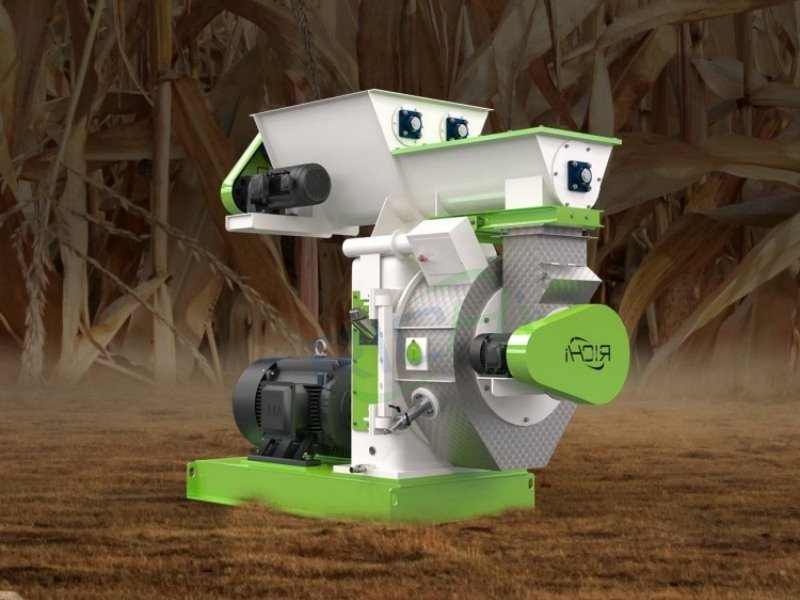
Agricultural waste is no longer viewed as a useless by-product in many countries. Materials such as wheat straw, rice straw, corn stalks, and barley straw are increasingly becoming valuable resources for renewable energy projects. With rising fuel prices and stronger environmental regulations, biomass fuel production continues to grow rapidly across farms, energy plants, and industrial heating industries. In this market, the straw pellet mill has become one of the most important pieces of biomass processing equipment.
Why Straw Pellets Are Becoming More Popular
Straw pellets offer several advantages compared with traditional fossil fuels and loose agricultural residues. First, pelletized biomass has a higher density, making transportation and storage more efficient. Second, pellets burn more evenly and generate less smoke during combustion. Third, many farms already have large amounts of straw waste available after harvesting seasons.
Countries with strong agricultural industries are especially interested in converting crop residues into clean fuel. This creates opportunities for investors looking to build biomass fuel factories using straw-based raw materials. A reliable straw pellet mill helps transform low-value waste into profitable renewable energy products.
Important Equipment in a Straw Pellet Production System
A complete straw pellet production line usually includes crushing equipment, drying systems, pellet mills, cooling machines, screening systems, and packaging units. Since straw contains high fiber content and variable moisture levels, proper pretreatment is essential before pelletizing.
The crushing section reduces raw material size for easier processing. Drying equipment lowers moisture to suitable pelletizing levels, typically around 12% to 15%. After that, the pellet machine compresses the material into dense cylindrical pellets under high pressure.
For medium-sized biomass projects, many investors are interested in the 1-2 T/H straw pellet plant for sale because it balances production efficiency and investment cost. This capacity is suitable for agricultural cooperatives, small biomass fuel suppliers, and independent energy producers seeking stable output without excessive operating expenses.
Key Advantages of Modern Straw Pellet Mills
Modern pellet production technology focuses heavily on automation, durability, and energy efficiency. Advanced pellet mills can process different agricultural residues while maintaining stable pellet quality. Operators can adjust pellet diameter and density according to fuel market requirements.
Another major advantage is reduced labor demand. Automated feeding, cooling, and packing systems help lower operating costs while improving productivity. In addition, high-quality ring die pellet mills offer longer service life and lower maintenance frequency.
When selecting equipment suppliers, buyers often pay attention to engineering experience, installation support, and spare parts availability. Companies such as Richi Machinery have attracted global attention by providing customized biomass pellet solutions for different raw materials and production capacities.
Choosing the Right Biomass Pellet Solution
Every biomass project has different requirements depending on local raw material conditions and fuel demand. Some factories mainly process rice straw, while others focus on wheat straw or mixed crop residues. Therefore, equipment configuration should be designed according to moisture levels, raw material size, and target pellet output.
Investors should also consider electricity consumption, plant layout, automation level, and future expansion possibilities before purchasing machinery. A professionally designed pellet plant can significantly improve production efficiency and long-term profitability.
If you want to learn more about biomass fuel equipment selection and project planning, you can explore additional technical information through this link. Understanding the entire pelletizing process before investing can help avoid unnecessary operating challenges later.
Future Development of Straw Pellet Fuel
As global demand for renewable energy continues to rise, biomass pellet production is expected to expand further in both developed and developing countries. Agricultural waste recycling not only creates new business opportunities but also reduces environmental pollution caused by open-field straw burning.
With advanced equipment and proper project planning, straw pellet production can become a sustainable and profitable industry for farms, biomass energy companies, and industrial fuel suppliers worldwide.
(Related Post: https://www.richipelletmill.com/straw-pellet-mill/)