
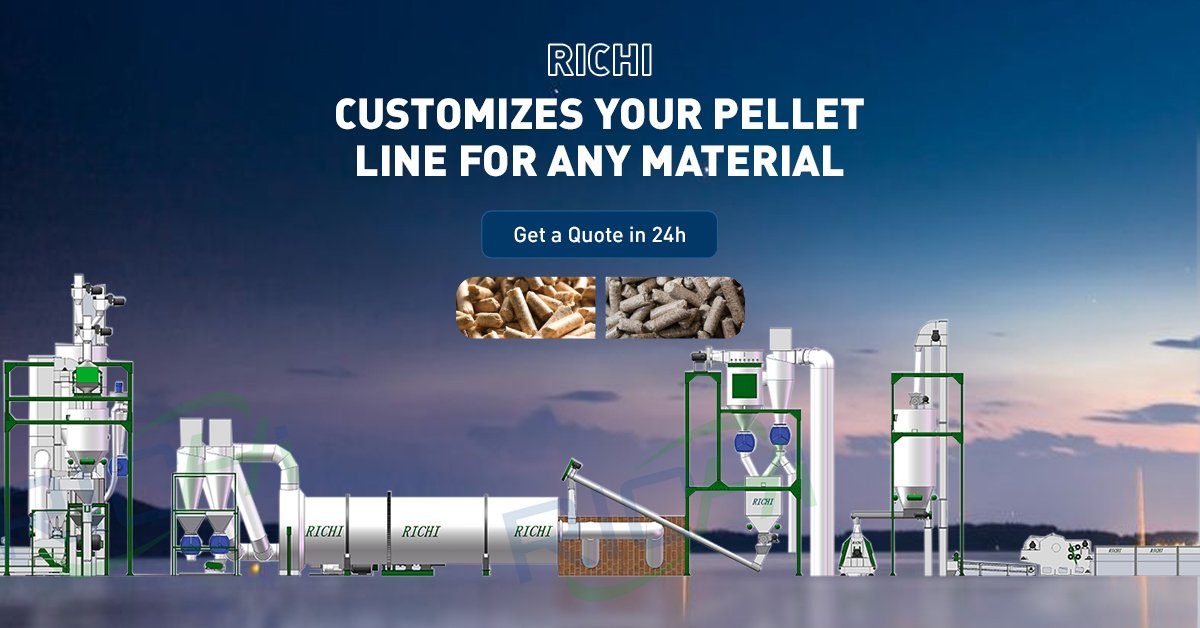
Every harvest season, millions of tons of agricultural residues are left in fields around the world. Materials such as wheat straw, rice straw, corn stalks, barley straw, and oat straw have traditionally been burned, discarded, or left to decompose naturally. While these methods may seem convenient, they represent a significant waste of renewable biomass resources.
Today, governments, biomass fuel suppliers, livestock farms, and renewable energy companies are looking for more sustainable ways to utilize agricultural waste. One of the fastest-growing solutions is converting straw into biomass fuel pellets through a modern straw pellet manufacturing line.
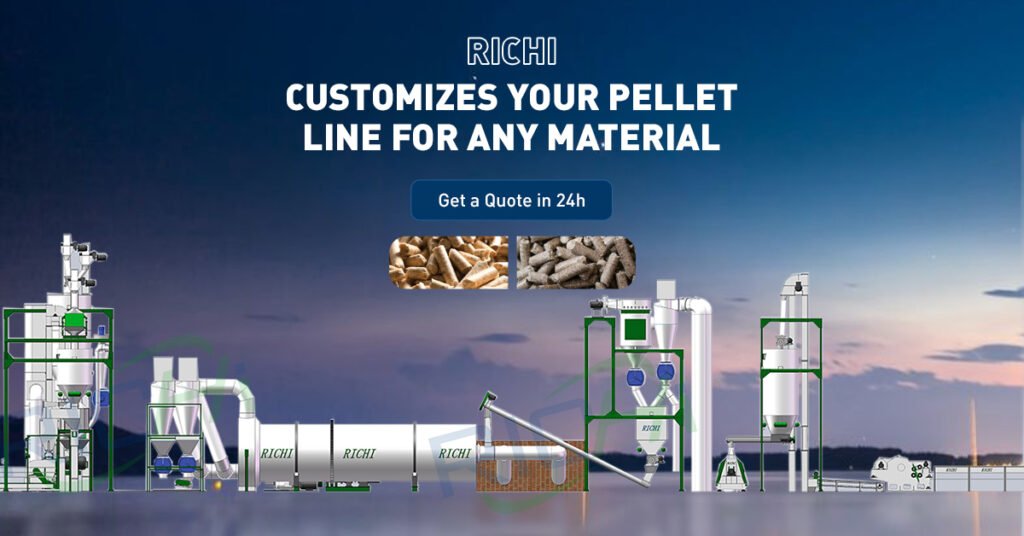
Unlike simple pellet presses, a complete production system integrates crushing, drying, pelleting, cooling, screening, packaging, and intelligent control. This integrated process ensures stable pellet quality while maximizing production efficiency.
Why Straw Has Become a Valuable Renewable Resource
Agricultural straw possesses excellent characteristics for pellet production. It is widely available, renewable, and relatively inexpensive. With proper processing, straw pellets offer high bulk density, easier transportation, cleaner combustion, and lower storage costs than loose biomass.
Several industries benefit from straw pellets, including:
- Industrial biomass power plants
- Commercial heating facilities
- Household heating markets
- Animal bedding suppliers
- Biomass fuel distributors
- Export-oriented pellet manufacturers
The growing demand for renewable fuels has significantly increased investment in biomass pellet factories worldwide.
The Complete Manufacturing Process
A professional pellet factory is much more than a single machine. Every production stage contributes directly to final pellet quality.
Raw Material Preparation
Fresh straw usually contains moisture levels between 18% and 35%. Before pelleting, oversized materials are chopped into smaller particles and dried to an optimal moisture content.
Modern hammer mills and shredders ensure consistent particle sizes, allowing the pellet mill to operate efficiently.
Drying Process
Moisture control is one of the most important factors affecting pellet durability. Industrial dryers reduce moisture while maintaining fiber integrity.
Proper drying also lowers energy consumption during pelletizing.
Pellet Formation
Inside the pellet mill, rollers compress the prepared biomass through hardened ring dies under high pressure. The natural lignin within the straw softens during compression and acts as a natural binder without additional chemicals.
Many investors choosing biomass diversification also compare equipment such as the 1-2 T/H hay pellet making machine for sale, especially when processing mixed forage materials alongside straw.
Cooling and Screening
Fresh pellets exit the pellet mill at elevated temperatures. Counterflow coolers gradually reduce pellet temperature while improving hardness.
Vibrating screens remove fines before packaging.
Packaging
Depending on customer requirements, pellets can be packed into:
- 15 kg bags
- 25 kg bags
- Jumbo bags
- Bulk loading systems
Automation significantly reduces labor costs while improving packaging consistency.
Why Investors Prefer Complete Production Lines
Purchasing individual equipment from different suppliers often creates compatibility problems.
A complete straw pellet manufacturing line provides:
- Matching machine capacities
- Unified automation
- Stable production
- Lower maintenance costs
- Easier installation
- Centralized technical support
Integrated engineering also simplifies future capacity expansion.
Production Capacity Options
Production requirements vary significantly between customers.
Small investors often begin with capacities around one ton per hour before expanding.
Large commercial manufacturers may require multiple pellet mills operating simultaneously.
For companies planning larger forage businesses, equipment such as the 5-6 T/H hay pellet machine for sale can complement biomass operations by processing grass and forage crops during different seasons.
This flexible equipment utilization improves annual return on investment.
Factors That Influence Pellet Quality
Many newcomers assume pellet quality depends only on the pellet mill.
In reality, several variables affect the final product:
- Moisture content
- Raw material size
- Fiber composition
- Die compression ratio
- Cooling efficiency
- Storage conditions
Optimizing each production stage produces pellets with higher density, stronger durability, and lower dust generation.
Energy Efficiency Matters
Electricity consumption represents a major operating expense.
Modern factories improve efficiency through:
- Variable-frequency motors
- Intelligent feeding systems
- Automated lubrication
- Energy-saving dryers
- Optimized airflow
- Real-time monitoring
Reducing unnecessary energy losses directly improves profitability.
Automation Makes Production Easier
Labor shortages continue affecting manufacturing worldwide.
Today’s production lines increasingly feature:
- PLC control systems
- Touchscreen operation
- Automatic alarms
- Remote diagnostics
- Recipe management
- Data recording
Operators require less manual intervention while maintaining consistent production.
(Related Post:https://biomasspelletizer.com/corn-stalk-pellet-machine/)
Choosing the Right Equipment Supplier
Beyond machinery specifications, engineering capability plays a major role in project success.
Experienced suppliers typically provide:
- Factory layout design
- Raw material analysis
- Capacity planning
- Installation guidance
- Operator training
- Long-term technical support
Many international biomass investors cooperate with Richi Machinery because integrated engineering services simplify project implementation from planning through commercial operation.
Environmental Benefits
Using agricultural residues creates several environmental advantages.
Instead of open-field burning, crop waste becomes renewable fuel.
Benefits include:
- Reduced air pollution
- Lower greenhouse gas emissions
- Better agricultural waste utilization
- Increased farmer income
- Renewable energy production
- Circular economy development
These advantages align with global sustainability initiatives.
Future Market Opportunities
Demand for biomass pellets continues expanding across Europe, Asia, South America, and Africa.
Growing carbon reduction policies encourage industrial users to replace fossil fuels with renewable biomass.
Investors entering the industry today are positioning themselves for long-term market growth.
As production technology improves, complete straw pellet manufacturing line solutions will become increasingly efficient and cost-effective.
Businesses considering biomass investments should carefully evaluate raw material availability, target markets, production capacity, and equipment suppliers before making purchasing decisions.
If you’re researching pellet manufacturing technologies or comparing complete biomass production solutions, look at this website to explore more industry resources and practical engineering insights.
Whether producing fuel pellets, animal bedding pellets, or agricultural biomass products, selecting reliable equipment remains the foundation of every successful project.
Many experienced manufacturers continue recommending Richi Pelletizer systems because they combine engineering experience with customized production solutions suitable for projects of different capacities.
Ultimately, a professionally designed straw pellet manufacturing line provides the flexibility, efficiency, and production stability required to compete in today’s rapidly growing renewable energy industry.