
Waste paper can accumulate rapidly in printing plants, packaging factories, recycling facilities, and commercial businesses. When suitable paper residues are available in sufficient quantities, densification can offer another way to improve material handling and create a more compact solid product.
For companies researching paper pellet machine price, however, the purchase decision should not be based on the machine quotation alone. Raw material condition, preparation requirements, production capacity, auxiliary equipment, and the intended use of the final pellets can all influence the overall investment.
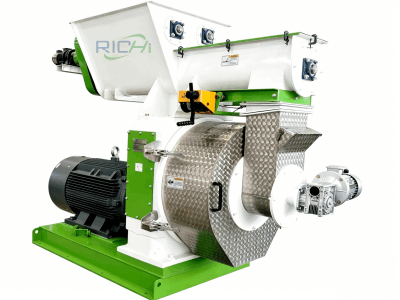
Raw Material Determines the Process
Paper waste is available in many forms. Loose office paper, cardboard trimming, printing waste, and industrial paper residues can differ in size, density, moisture, and contamination.
Before pelletizing, unsuitable materials such as plastics, metal pieces, and other foreign objects should be separated. This protects the processing equipment and improves the consistency of the final product.
Large sheets and cardboard pieces may also require shredding or crushing before they can be fed continuously into the pelletizing section.
Capacity Should Follow Supply
The available quantity of waste paper is an important factor when choosing equipment.
A recycling workshop with a few hundred kilograms of material per day does not necessarily need a large industrial system. A packaging factory generating several tons of suitable waste every day may require continuous processing and automated conveying.
The planned working hours should also be considered. Instead of selecting a machine solely according to its maximum rated capacity, businesses can calculate the required daily output and determine how long the equipment needs to operate.
Different Biomass Materials Need Different Equipment
Pelletizing technology is also used for forestry and agricultural residues, but different feedstocks can require different preparation methods.
For example, wood chip pellet machine price is influenced by factors such as chip size, moisture, required crushing, production capacity, and downstream configuration. Wood chips generally have very different physical characteristics from paper waste.
Therefore, equipment quotations should always be evaluated in relation to the specific feedstock instead of assuming that one configuration is suitable for every type of biomass.
What Auxiliary Equipment May Be Required?
A small paper pellet project may use a relatively simple process, while an industrial installation can include multiple preparation and handling stages.
A typical configuration may involve sorting, shredding or crushing, drying when necessary, conveying, pelletizing, cooling, screening, and packaging.
The auxiliary machines should be balanced with the main pelletizing equipment. If material preparation is too slow, the pellet mill cannot operate continuously. Similarly, insufficient cooling or screening capacity can create a bottleneck after pelletizing.
Pellet Quality and Final Application
The intended application should be established before selecting the equipment.
Pellet diameter, density, durability, moisture, and fines content may all be important depending on how the finished material will be handled or used. The die configuration and operating conditions can then be selected accordingly.
For businesses comparing a complete pellet production line, the entire process should be evaluated rather than comparing the price of one machine in isolation.
Calculate the Total Investment
The total project cost may include the main pellet machine, preparation equipment, conveyors, electrical controls, cooling equipment, screening equipment, packaging, installation, and factory infrastructure.
A lower machine quotation is not always the lowest-cost solution if additional equipment must later be purchased to solve production bottlenecks.
Before requesting a quotation, buyers should provide the material type, daily quantity, moisture level, desired capacity, pellet size, and final application.
For further information about equipment configuration and biomass processing, read more about different pellet production technologies and system layouts.
A successful waste paper pellet project begins with understanding the material. Once the feedstock, output target, and final application are clearly defined, the equipment configuration and investment can be evaluated much more accurately.
Related post:https://pelletizerequipment.com/cat-litter-pellet-machine/