
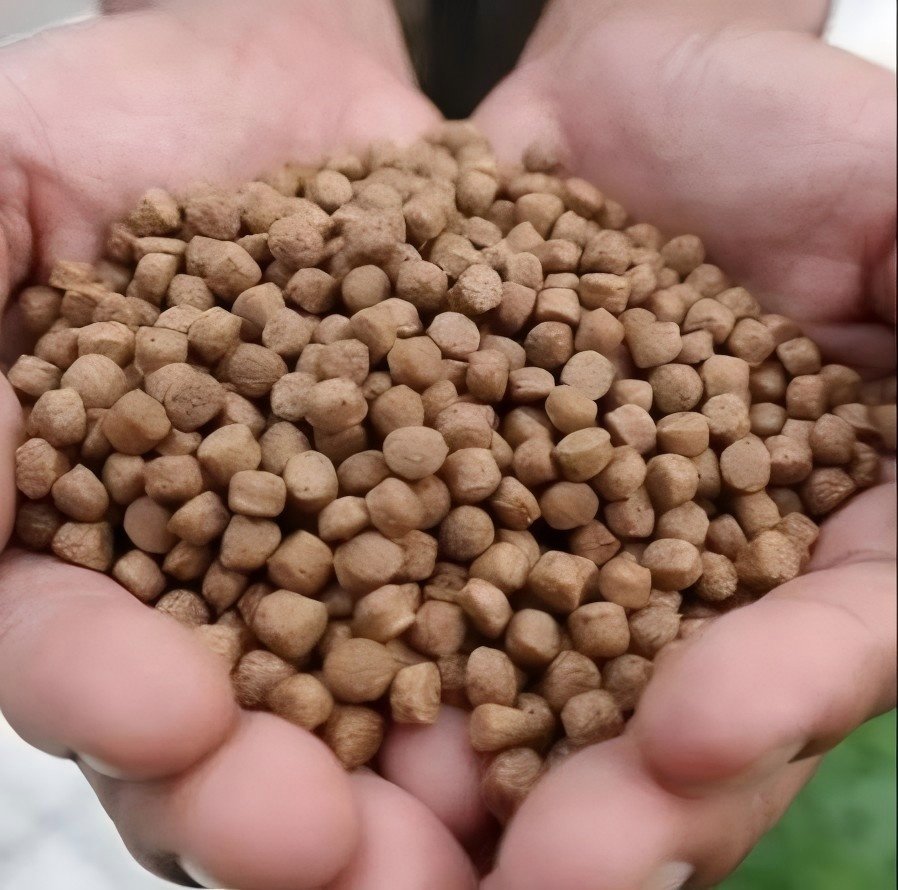
Introduction: The Role of Feed Production in Modern Aquaculture
Aquaculture has become one of the fastest-growing sectors in global food production. With increasing demand for fish, shrimp, and other aquatic products, farmers are facing greater challenges in improving productivity while controlling production costs. Among all factors affecting aquaculture performance, feed quality and feeding efficiency play a critical role.
Feed usually represents the largest operating expense in fish farming, accounting for a significant portion of total production costs. Therefore, producing high-quality aquatic feed with balanced nutrition, stable water performance, and good digestibility has become essential for improving farm profitability.
Modern aquatic feed production technology helps farmers transform raw materials into highly efficient floating feed pellets that can maximize nutrient utilization, reduce feed waste, and support healthier aquatic animals. By investing in advanced feed processing equipment such as a floating fish feed extruder machine, aquaculture businesses can achieve more accurate feeding management and significantly improve overall farming efficiency.
1. Optimized Feed Quality Improves Fish Growth Performance
The quality of aquatic feed directly determines the growth rate and survival rate of farmed species. Traditional feeding methods often rely on simple mixtures of raw materials, which may result in uneven nutrient distribution and poor feed utilization.
A professional aquatic feed production process allows manufacturers to precisely control the formulation and processing of feed. Ingredients such as fish meal, soybean meal, corn, wheat bran, rice bran, vegetable protein sources, vitamins, minerals, and functional additives can be accurately mixed according to the nutritional requirements of different species.
Through advanced processing technologies, aquatic feed producers can manufacture pellets with:
- Balanced protein and energy levels
- Uniform pellet size
- Improved digestibility
- Better water stability
- Reduced nutrient loss
For example, young fish require smaller pellets with higher nutritional density, while adult fish may need larger pellets with different nutrient ratios. A flexible aquatic feed production system enables manufacturers to produce various feed types suitable for different growth stages.
As a result, farmers can provide fish with more suitable nutrition, improving feed conversion ratios (FCR) and reducing the amount of feed required to achieve the same growth target.
2. Floating Feed Technology Reduces Feed Waste
One of the biggest challenges in aquaculture is feed loss. When feed sinks quickly to the bottom of ponds or cages, fish may not consume all pellets before they become unavailable. This not only increases production costs but also causes water pollution.
Floating aquatic feed solves this problem by allowing feed pellets to remain on the water surface for an extended period. Farmers can easily observe feeding behavior and adjust feeding quantities according to actual demand.
The production of floating feed relies on extrusion technology. During extrusion, raw materials are processed under high temperature, pressure, and mechanical shear forces. The structure of the feed changes, creating lightweight pellets with controlled buoyancy.
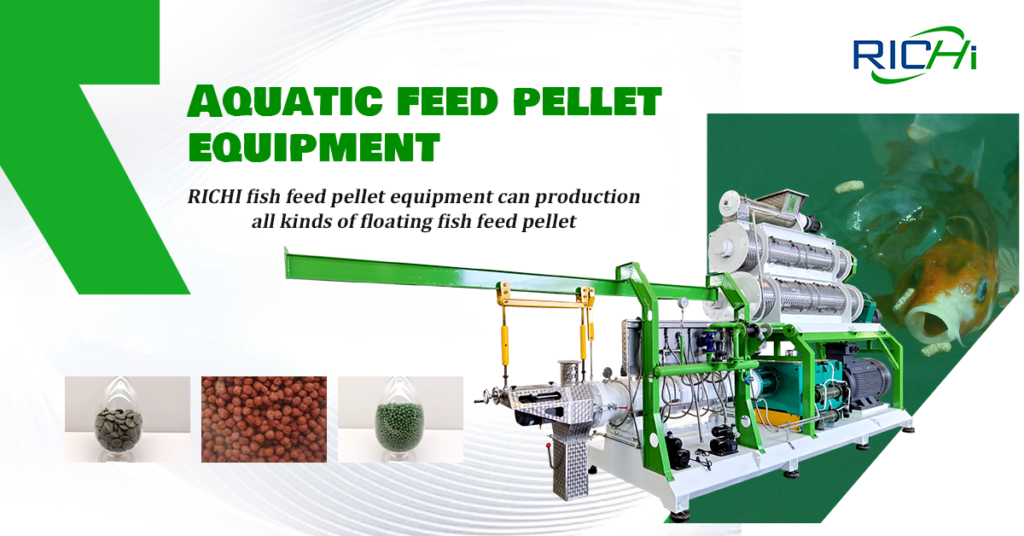
A floating fish feed extruder machine is specially designed to produce floating pellets with:
- Stable floating time
- Uniform pellet shape
- Adjustable density
- Better nutrient retention
- Higher water stability
This technology helps farmers reduce unnecessary feed consumption because they can immediately identify whether fish have enough feed. Less wasted feed means lower operating costs and cleaner farming environments.
3. Better Feed Conversion Reduces Farming Costs
Feed conversion ratio is one of the most important indicators of aquaculture efficiency. A lower FCR means fish require less feed to gain the same amount of body weight.
Poor-quality feed often leads to:
- Slow growth
- Higher feed consumption
- Increased farming duration
- More production expenses
Aquatic feed production improves FCR by creating feed pellets that are easier for fish to digest and absorb.
During extrusion processing, starch ingredients are gelatinized, improving pellet digestibility. At the same time, the extrusion process can enhance pellet structure and reduce nutrient leakage into water.
High-quality aquatic feed allows fish to obtain more energy and nutrients from each pellet. This means farmers can achieve faster growth rates while spending less on feed materials.
For commercial fish farms, even a small improvement in feed conversion can create significant economic benefits because thousands of tons of feed may be consumed annually.
4. Customized Feed Production Meets Different Aquaculture Needs
Different aquatic species have different nutritional requirements. A feeding formula suitable for tilapia may not be ideal for shrimp, catfish, trout, or ornamental fish.
Modern aquatic feed production provides the flexibility needed for specialized farming systems.
By adjusting:
- Raw material selection
- Protein content
- Fat content
- Pellet size
- Pellet density
- Floating or sinking characteristics
feed manufacturers can develop products designed for specific species and farming conditions.
For example:
- Small fish need small-diameter floating pellets that are easy to consume.
- Carnivorous species require higher protein feed.
- Shrimp often need water-stable pellets that remain intact longer.
- Large fish require stronger pellets with appropriate hardness.
A complete aquatic feed production line allows manufacturers to quickly adjust production parameters and respond to changing market requirements.
This flexibility helps feed companies provide better products to farmers while improving their competitiveness.
5. Automated Feed Production Improves Manufacturing Efficiency
Besides improving feed quality, modern feed production technology also increases manufacturing efficiency.
Traditional manual feed processing requires significant labor and often results in inconsistent product quality. Automated production systems can integrate multiple processes, including:
- Raw material cleaning
- Crushing
- Batching
- Mixing
- Extrusion
- Drying
- Cooling
- Screening
- Packaging
Automation reduces human errors and improves production consistency.
A complete aquatic feed production line can also be equipped with PLC control systems, allowing operators to monitor production parameters such as:
- Temperature
- Moisture level
- Production speed
- Equipment operation status
This reduces labor requirements while improving production stability, making large-scale feed manufacturing more economical.
6. Extrusion Technology Enhances Feed Performance
Extrusion is one of the most important technologies in modern aquatic feed manufacturing. Compared with traditional pelletizing methods, extrusion provides better control over pellet characteristics.
During extrusion, raw materials experience controlled heat and pressure. This process helps:
- Improve starch digestibility
- Destroy harmful microorganisms
- Increase pellet durability
- Enhance water stability
- Improve feed utilization
The floating fish feed extruder machine plays a key role in this process. It can produce floating pellets with different sizes and shapes by changing dies and adjusting operating parameters.
For commercial aquaculture feed plants, extrusion equipment provides the ability to produce high-quality feed products that meet strict market standards.
Whether producing feed for freshwater fish, marine fish, or specialty aquatic species, extrusion technology provides better control over final feed performance.
https://richipelletizer.com/floating-fish-feed-extruder-machine
7. Improved Water Quality Creates a Healthier Farming Environment
Water quality is closely connected with feed efficiency. Excess feed that remains uneaten decomposes in water, increasing ammonia levels and reducing oxygen availability.
Poor water conditions can lead to:
- Fish stress
- Disease outbreaks
- Lower survival rates
- Increased production costs
High-quality aquatic feed helps maintain cleaner water because nutrients are better absorbed by fish rather than released into the farming environment.
Floating pellets provide another advantage because farmers can remove unused feed more easily. This allows better feeding control and prevents excessive organic accumulation.
By reducing pollution caused by feed waste, efficient aquatic feed production supports sustainable aquaculture practices.
8. Large-Scale Aquaculture Benefits from Professional Feed Production
As aquaculture farms expand, relying on commercial-quality feed becomes increasingly important.
Large fish farms require thousands of tons of feed annually, and inconsistent feed supply can affect production schedules.
Building an aquatic feed production facility provides several advantages:
Stable Feed Supply
Farmers and feed companies can produce feed according to their own schedules, reducing dependence on external suppliers.
Lower Long-Term Costs
Although establishing a feed production line requires investment, producing feed internally can reduce purchasing costs over time.
Better Quality Control
Manufacturers can directly control raw materials, formulas, and production processes.
Market Expansion
Commercial feed producers can supply customized products to different aquaculture farms and develop additional revenue streams.
For investors entering the aquaculture industry, modern feed production technology provides a foundation for long-term business growth.
9. Energy Efficiency and Sustainable Feed Manufacturing
Sustainability is becoming increasingly important in global aquaculture. Efficient feed production helps reduce resource consumption by improving raw material utilization.
Modern equipment is designed to optimize:
- Energy consumption
- Production capacity
- Raw material efficiency
- Labor requirements
Advanced machines also allow manufacturers to utilize alternative protein sources and agricultural by-products, reducing dependence on limited resources.
Examples of alternative ingredients include:
- Plant protein meals
- Grain by-products
- Agricultural processing residues
Through scientific formulation and advanced processing, these materials can become valuable components of high-quality aquatic feed.
10. Choosing the Right Aquatic Feed Production Equipment
Selecting suitable equipment is essential for achieving efficient feed production. Different investors may require different solutions depending on:
- Target aquatic species
- Production capacity
- Feed type
- Raw materials
- Investment budget
A small fish farm may choose a compact feed processing system, while a commercial feed manufacturer may require a complete automatic production line.
Important factors when selecting equipment include:
Production Capacity
The machine should match current production requirements while allowing future expansion.
Feed Type
Different equipment configurations may be needed for floating feed, sinking feed, or slow-sinking feed.
Automation Level
Automatic systems reduce labor costs and improve production consistency.
Equipment Durability
High-quality components help ensure stable operation and reduce maintenance requirements.
Working with an experienced aquatic feed machinery manufacturer allows investors to receive customized solutions based on their specific needs.
(Learn more about floating fish feed pellet making machine)
Conclusion: Aquatic Feed Production Is the Key to Efficient Farming
Efficient aquaculture depends not only on farming techniques but also on the quality of feed supplied to aquatic animals. Advanced aquatic feed production technology improves farming efficiency by enhancing feed quality, reducing waste, improving feed conversion, and supporting healthier aquatic environments.
The application of modern equipment, especially the floating fish feed extruder machine, enables manufacturers to produce stable, nutritious, and high-performance floating pellets that meet the requirements of different fish species.
For commercial aquaculture businesses, investing in professional feed production technology is not only a way to reduce operational costs but also an important strategy for achieving sustainable growth. With continuous improvements in automation, extrusion technology, and feed formulation, aquatic feed production will continue to play a vital role in building a more efficient and profitable aquaculture industry. (Richi Pellet Mill)