
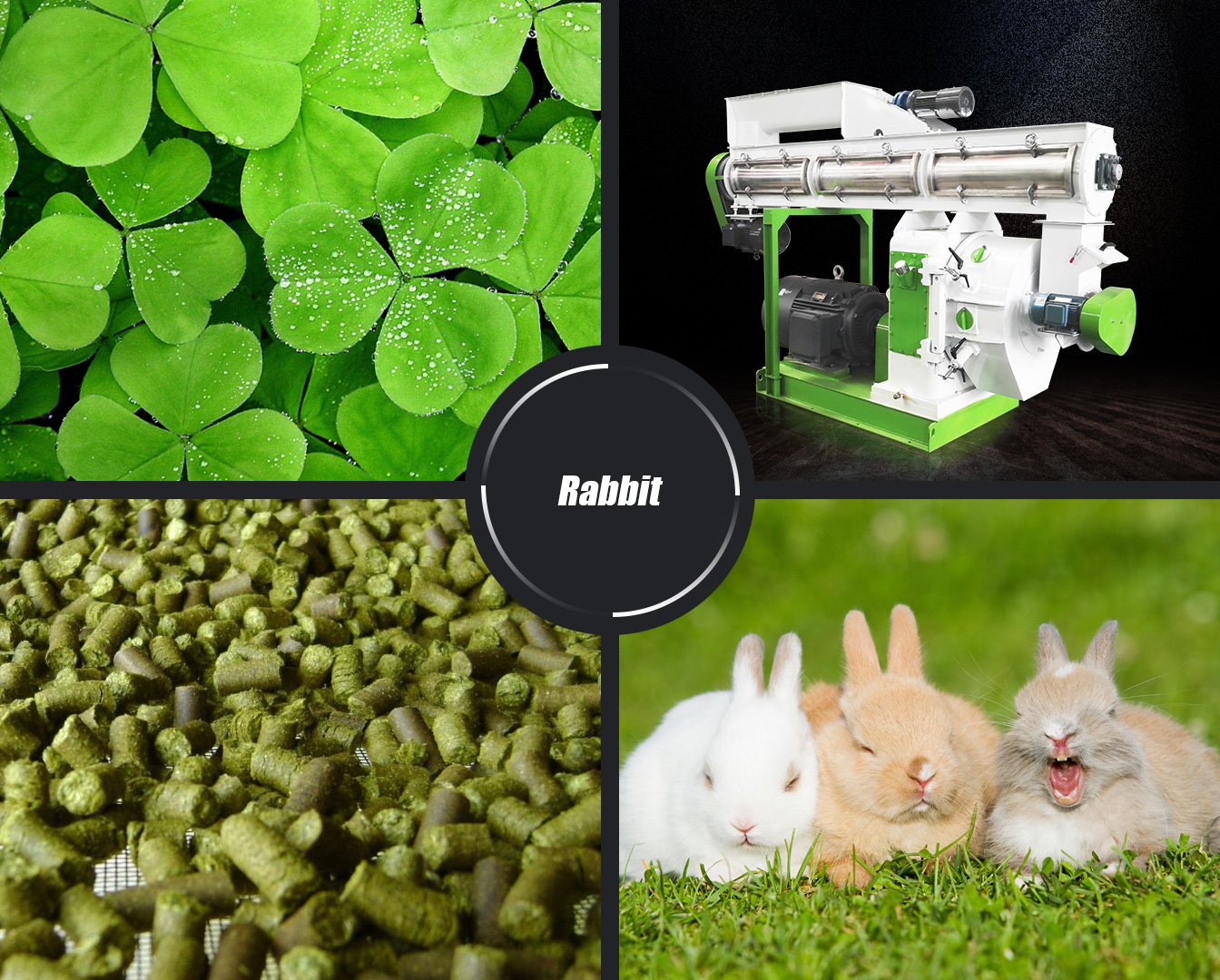
Rabbit farming has become an increasingly important part of modern livestock agriculture due to rising demand for high-quality meat, fur, and laboratory animals. As rabbit production scales up from small backyard operations to commercial farming systems, feed quality and production efficiency have become central concerns. A well-designed rabbit feed production line plays a crucial role in ensuring stable nutrition, consistent pellet quality, and cost-effective manufacturing. Understanding how this system works also helps investors and farmers choose the right equipment, including the rabbit feed pellet making machine and integrated livestock feed production line.
A modern rabbit feed production system is not just a single machine but a coordinated process involving multiple stages of raw material handling, grinding, mixing, pelletizing, cooling, and packaging. Each stage contributes to the final quality of rabbit feed pellets, which directly affects animal growth performance, digestion efficiency, and farm profitability.
1. Importance of Efficient Rabbit Feed Production
Rabbits are highly sensitive animals with delicate digestive systems. Their feed must be carefully balanced with fiber, protein, vitamins, and minerals. Poor-quality feed can lead to digestive disorders, low growth rates, and high mortality.
Efficient rabbit feed production ensures:
- Stable nutritional composition
- Proper fiber content for digestion
- High pellet durability
- Reduced feed waste
- Improved feed conversion ratio (FCR)
This is why commercial farms increasingly rely on automated systems instead of manual feed preparation. A modern livestock feed production line ensures uniform quality and large-scale output, which is impossible to achieve with traditional methods.
2. Overview of Rabbit Feed Production Line Workflow
A standard rabbit feed production line includes the following major sections:
- Raw material receiving and cleaning
- Crushing (grinding) system
- Mixing system
- Pelletizing system (rabbit feed pellet making machine)
- Drying system
- Cooling system
- Screening system
- Packaging system
Each stage is interconnected, forming a continuous production flow that ensures high efficiency and consistent output.
3. Raw Material Preparation
The production process begins with selecting and preparing raw materials. Common ingredients in rabbit feed include:
- Alfalfa meal
- Grass meal
- Corn flour
- Wheat bran
- Soybean meal
- Rice bran
- Vitamin and mineral premixes
These raw materials must be carefully stored and inspected before entering the production line. Moisture content, particle size, and contamination levels are checked to ensure quality standards.
In an efficient livestock feed production line, raw materials are automatically conveyed into silos and measured using electronic weighing systems. This reduces human error and ensures precise formulation.
4. Crushing System: Improving Digestibility
Rabbits require finely processed feed for proper digestion. Therefore, the crushing stage is essential.
A hammer mill is typically used to grind raw materials into fine powder. The particle size is usually controlled between 1–3 mm depending on feed formulation.
The benefits of proper grinding include:
- Improved mixing uniformity
- Better pellet formation
- Increased digestibility
- Reduced waste in final feed
Without proper grinding, the rabbit feed pellet making machine cannot produce high-quality pellets, and feed efficiency will decrease significantly.
5. Mixing System: Ensuring Nutritional Balance
After grinding, the materials enter a horizontal or vertical mixer. This stage is crucial for ensuring every pellet contains a balanced nutrient profile.
During mixing, micro-ingredients such as vitamins, amino acids, and minerals are evenly distributed throughout the batch. Oil or molasses may also be added to improve taste and energy content.
A high-performance mixer ensures:
- Uniform nutrient distribution
- Consistent feed quality
- Stable pellet performance
- Reduced nutrient loss
Modern livestock feed production line systems often use automated batching systems to improve accuracy and efficiency in mixing.
6. Pelletizing System: The Role of Rabbit Feed Pellet Making Machine
The heart of the entire process is the rabbit feed pellet making machine. This machine transforms powdered feed into solid pellets that are easy for rabbits to consume and digest.
How pelletizing works
Inside the machine, conditioned feed material is forced through a die under high pressure. The combination of heat, pressure, and mechanical force shapes the feed into cylindrical pellets.
Key features of pelletizing include:
- Adjustable pellet size
- Controlled density
- Strong pellet durability
- Reduced feed dust
The rabbit feed pellet making machine ensures that pellets are uniform, compact, and nutritionally stable.
https://pelletisingmachine.com/rabbit-feed-pellet-making-machine
Why pellet feed is important for rabbits
Pellet feed offers several advantages:
- Prevents selective eating
- Reduces feed waste
- Improves digestion
- Ensures balanced nutrient intake
- Increases feed efficiency
Unlike powder feed, pellets maintain structure during feeding, which is especially important for rabbits.
7. Conditioning Process: Enhancing Pellet Quality
Before entering the pelletizing chamber, the feed is conditioned using steam and moisture. This process softens the material and improves binding ability.
Conditioning benefits include:
- Better pellet hardness
- Improved gelatinization of starch
- Enhanced feed digestibility
- Increased production efficiency
A well-designed rabbit feed pellet making machine often includes a built-in conditioner to ensure optimal performance.
8. Drying System: Stabilizing Moisture Content
After pelletizing, the feed contains high moisture levels and must be dried. The drying system removes excess water to ensure safe storage and long shelf life.
Proper drying ensures:
- Prevention of mold growth
- Improved pellet hardness
- Extended shelf life
- Better transportation stability
In a modern livestock feed production line, drying temperature and airflow are carefully controlled to avoid damaging nutritional components.
9. Cooling System: Protecting Pellet Structure
Fresh pellets exiting the dryer are still hot. Cooling systems reduce temperature to room level while maintaining pellet integrity.
Cooling is essential because:
- It stabilizes pellet structure
- Prevents cracking and breakage
- Improves packaging quality
- Enhances storage stability
Counterflow coolers are commonly used in large-scale production systems due to their efficiency.
10. Screening System: Ensuring Product Quality
After cooling, pellets pass through a screening machine. This system separates:
- Broken pellets
- Powder residues
- Oversized particles
Only uniform and high-quality pellets proceed to packaging. This step ensures consistency in the final product.
11. Packaging System: Final Stage of Production
The final stage of the livestock feed production line is packaging. Pellets are automatically weighed and packed into bags or bulk containers.
Packaging ensures:
- Protection from moisture
- Easier transportation
- Accurate weight distribution
- Commercial presentation
Automated packaging systems significantly improve production efficiency and reduce labor costs.
12. Automation and Efficiency in Modern Production Lines
Modern rabbit feed production systems rely heavily on automation technology. PLC control systems manage the entire production process, including:
- Material feeding
- Mixing ratios
- Pellet machine operation
- Temperature control
- Packaging coordination
Automation ensures:
- Higher production efficiency
- Reduced human error
- Stable feed quality
- Lower operational costs
This is especially important in large-scale livestock feed production line facilities.
13. Energy Efficiency and Cost Control
Energy consumption is a major factor in feed production. Advanced systems are designed to reduce electricity usage through:
- High-efficiency motors
- Optimized transmission systems
- Smart control systems
- Reduced friction components
This helps lower production costs and increase profitability.
14. Applications of Rabbit Feed Production Line
A complete livestock feed production line is not limited to rabbit feed only. It can also be used for:
- Chicken feed
- Duck feed
- Pig feed
- Sheep feed
- Cattle feed
However, when producing rabbit feed specifically, fiber content control and pellet hardness adjustment are especially important.
15. Maintenance and Long-Term Operation
To ensure stable performance, regular maintenance is essential. Key maintenance tasks include:
- Cleaning pellet dies
- Lubricating bearings
- Checking hammer mill blades
- Inspecting belts and motors
- Calibrating mixing systems
Proper maintenance extends machine lifespan and ensures consistent output quality.
16. Future Development of Rabbit Feed Production Technology
The future of rabbit feed manufacturing is moving toward:
- Fully automated production lines
- AI-based feed formulation
- Energy-saving equipment
- Eco-friendly production systems
- Smart monitoring systems
As global demand for rabbit products continues to grow, efficient and intelligent livestock feed pellet production line systems will become even more important.
Conclusion
An efficient rabbit feed production line integrates multiple stages of processing to ensure high-quality, nutritious, and durable rabbit feed pellets. The rabbit feed pellet making machine plays a central role in transforming raw materials into uniform pellets, while supporting systems such as grinding, mixing, drying, cooling, and packaging ensure stability and efficiency.
With increasing global demand for rabbit farming, modern feed production technology provides farmers and investors with a reliable, scalable, and cost-effective solution. By adopting advanced livestock feed production line systems, producers can achieve higher productivity, better feed quality, and improved economic returns in the long term.